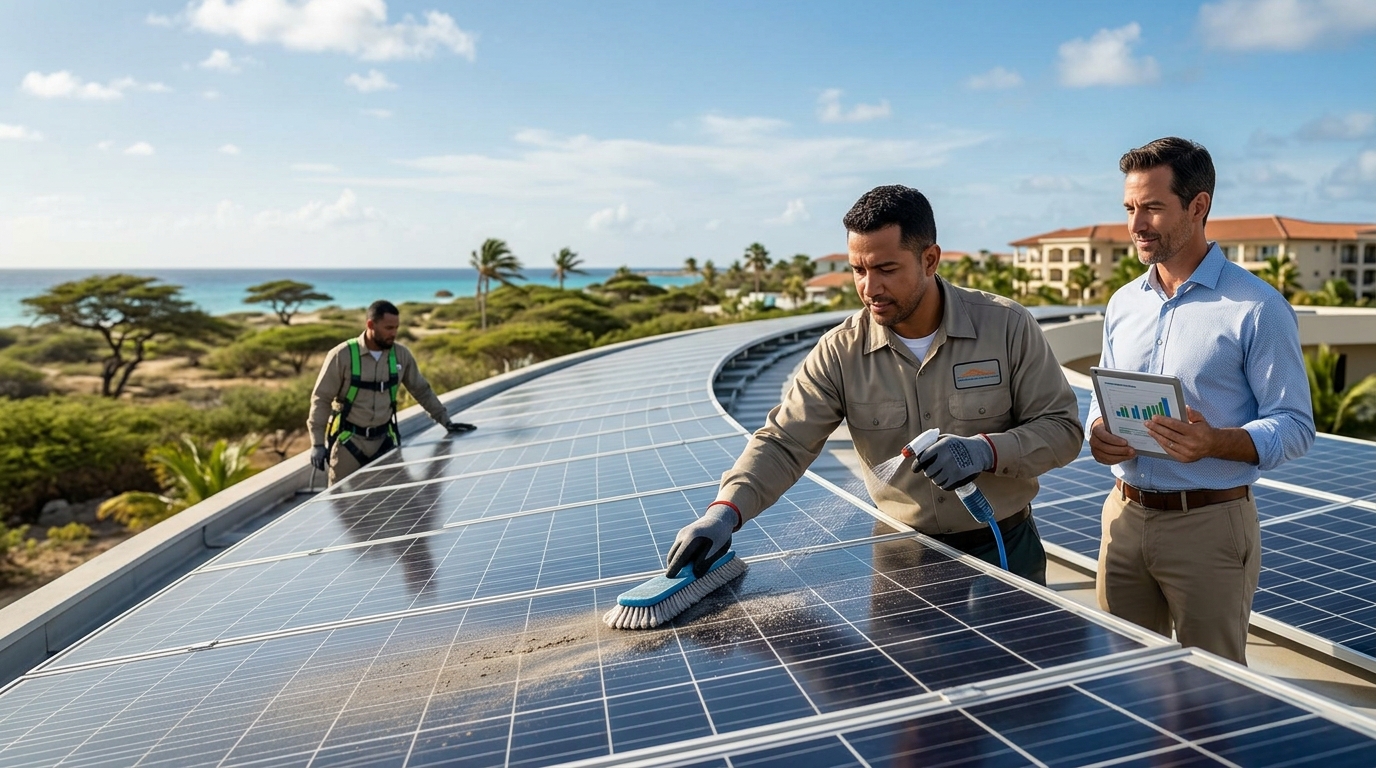
Aruba's dry, dusty climate requires solar panels to be cleaned every 3 to 6 months to maintain peak efficiency. Bello Electrical Services provides this guide to help property owners understand the specific environmental factors affecting photovoltaic performance. We cover professional maintenance schedules, cleaning methods, and safety protocols for the Caribbean island.
Professional Maintenance Schedules
Professional maintenance is the systematic inspection and servicing of solar energy systems to ensure long-term reliability. For commercial and residential installations in Aruba, a structured schedule is critical due to the accumulation of airborne particulates. Bello Electrical Services recommends a tiered approach based on system size and location. For additional details, review the Customer Experience.
Quarterly Inspections
Bi-Annual Deep Cleaning
Twice a year, panels require a thorough cleaning to remove baked-on dust and salt residue. This is distinct from a simple rinse. The process involves using deionized water and soft brushes to prevent micro-scratches on the glass surface. Skipping this step can lead to a 10 to 15 percent drop in energy production. For additional details, review the Frequently Asked Questions.
Annual Electrical Audit
Once a year, the electrical components, including inverters and junction boxes, must be tested. This audit verifies that the system meets NEN 1010 compliance standards. It ensures that all connections are tight and that there are no signs of corrosion from the humid coastal air. For additional details, review the About.
Aruba's Climate Impact on Solar Output
Aruba is known for its sunny weather, but the local environment presents unique challenges for solar technology. Understanding these factors helps owners set realistic expectations for their energy production. The island's specific geography dictates how quickly panels degrade in performance without care.
Dust and Sand Accumulation
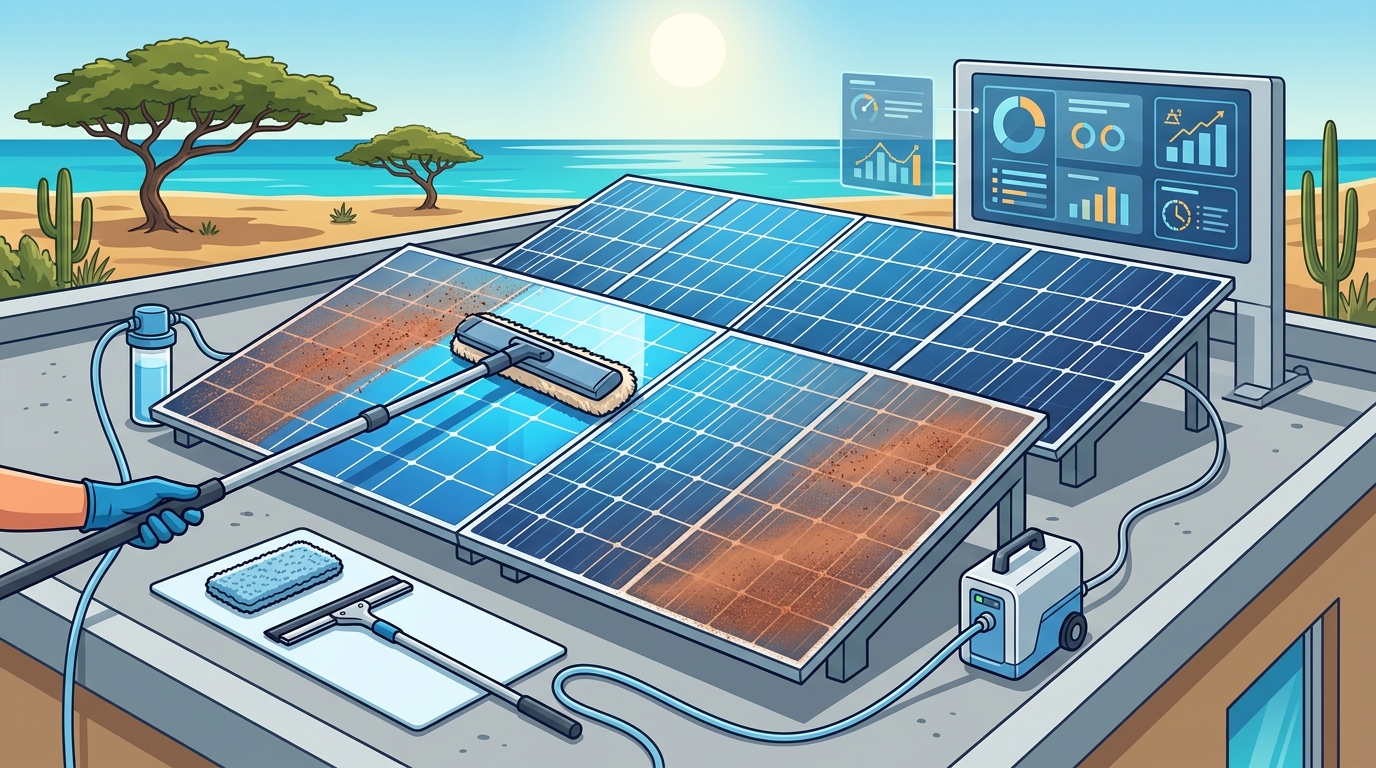
The island experiences regular dust events from the Sahara and local dry soil. This fine particulate matter settles on panel surfaces and blocks sunlight. Unlike rain-washed environments, Aruba has very little rainfall to naturally clean the arrays. This means manual or professional cleaning is the only effective removal method.
Salt Air Corrosion
Proximity to the ocean introduces salt aerosols into the air. Over time, salt deposits can corrode metal frames and electrical connectors. This corrosion can lead to electrical faults or reduced conductivity. Regular cleaning with fresh water helps mitigate this specific chemical degradation.
High UV Exposure
Aruba receives intense ultraviolet radiation year-round. While modern panels are designed to withstand this, prolonged exposure can degrade the encapsulant film. This degradation may cause slight discoloration or reduced light transmission. Monitoring the panel surface for yellowing is part of the maintenance routine.
Safe Cleaning Methods and Tools
Using the wrong tools can permanently damage solar panels. The glass surface is tempered but can be scratched by abrasive materials. Bello Electrical Services advises against using pressure washers or stiff bristle brushes. These tools can create micro-abrasions that trap dirt and reduce efficiency over time.
Water Quality Matters
Tap water in Aruba contains minerals that can leave white spots on the glass. These spots act as small blockers of sunlight. Using deionized or distilled water is the best practice for cleaning. If fresh water is scarce, a dry microfiber cloth can be used for light dust, but it is less effective for baked-on grime.
Timing the Clean
Cleaning should be done in the early morning or late afternoon. Cleaning hot panels can cause thermal shock, which may crack the glass. Additionally, water evaporates quickly in the midday heat, leaving mineral deposits behind. Cooler temperatures allow the water to rinse away dirt effectively.
Monitoring and Performance Tracking
Modern solar systems come with monitoring software that tracks energy production in real-time. This data is the most accurate indicator of when maintenance is needed. A sudden drop in output often signals a cleaning need or a technical fault.
Baseline Comparison
Owners should establish a baseline production level for their system. By comparing current output to the baseline, they can identify performance gaps. A drop of more than 5 percent from the expected output warrants an inspection. This data-driven approach prevents unnecessary cleaning visits.
Alert Systems
Many inverters send alerts when a string of panels underperforms. This can indicate a single dirty panel or a wiring issue. Responding to these alerts promptly prevents minor issues from becoming major repairs. Bello Electrical Services integrates with these monitoring platforms to provide proactive service.
Safety Protocols for Rooftop Work
Solar panel maintenance involves working at heights and around high-voltage equipment. Safety is the top priority for any technician performing this work. Only certified professionals should handle the electrical components of the system.
Personal Protective Equipment
Technicians must wear non-slip footwear, harnesses, and insulated gloves. The roof surface can be slippery, especially after rain or cleaning. Proper fall protection is mandatory for any work above a certain height. This ensures the safety of the worker and the integrity of the roof.
Electrical Safety
DC voltage from solar panels can be dangerous even when the grid is disconnected. Technicians must use insulated tools and verify zero energy before touching any connections. This protocol prevents electric shock and arc flash hazards. Compliance with local electrical codes is non-negotiable.
Cost and Benefit Analysis
Investing in regular maintenance yields a higher return on investment for solar systems. The cost of cleaning is minimal compared to the value of lost energy. A well-maintained system produces more electricity, offsetting the maintenance expense quickly.
| Maintenance Task | Frequency | Estimated Impact on Output | Professional Requirement |
|---|---|---|---|
| Visual Inspection | Quarterly | Prevents minor issues | Yes |
| Panel Cleaning | Every 3-6 Months | Restores 10-15% efficiency | Recommended |
| Electrical Audit | Annually | Ensures safety and compliance | Yes |
| Inverter Check | Annually | Prevents system downtime | Yes |
Key Takeaways
- Clean solar panels every 3 to 6 months in Aruba's dry climate.
- Use deionized water to prevent mineral spots on the glass.
- Monitor system output to identify when cleaning is needed.
- Annual electrical audits ensure NEN 1010 compliance.
- Salt air corrosion is a significant risk for coastal installations.
- Never use pressure washers or abrasive brushes on panels.
- Professional maintenance protects your investment and safety.
- Early morning cleaning is safer and more effective than midday.
Frequently Asked Questions
How often should I clean my solar panels in Aruba?
Due to the dry and dusty conditions, you should clean your panels every 3 to 6 months. If you notice a drop in energy production, you may need to clean them more frequently.
Can I clean my solar panels myself?
You can rinse them with a garden hose, but professional cleaning is recommended for deep grime. DIY cleaning carries safety risks if you are not comfortable working on a roof.
Does rain clean solar panels in Aruba?
Aruba has very little rainfall, so rain is not a reliable cleaning method. You should not rely on rain to keep your panels clean.
What is the best water to use for cleaning?
Deionized or distilled water is the best choice. Tap water contains minerals that can leave spots on the panel surface.
How much does professional maintenance cost?
Costs vary based on system size and roof accessibility. Bello Electrical Services provides custom quotes based on your specific installation.
Is maintenance covered by warranty?
Most manufacturer warranties require regular maintenance to remain valid. Neglecting cleaning and inspections can void your warranty. Learn more: Commercial Electrician Aruba Bello.