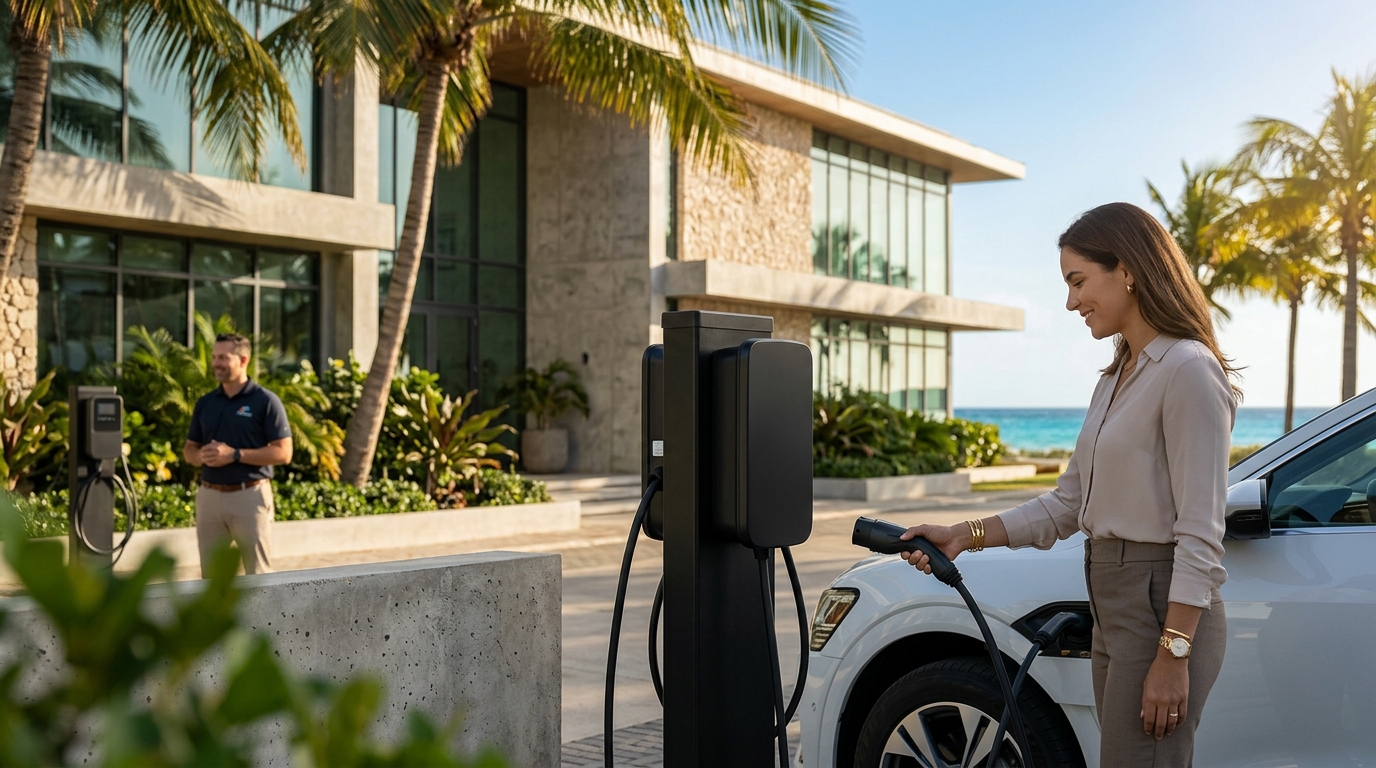
Yes, specific features are critical for EV charging station installations. You must verify charging speed levels, safety certifications, electrical capacity, connector compatibility, smart features, and weatherproofing ratings. Bello Electrical Services provides this comprehensive guide to help Aruba businesses select the right infrastructure. This article covers the technical and operational requirements for safe, compliant, and efficient EV charging deployments.
Charging Speed Levels
Charging speed is the primary differentiator for user experience and operational efficiency. The speed is determined by the power output of the charging station and the vehicle's onboard charger capability. Understanding these levels helps you match the hardware to your customer base. For additional details, review the .
Level 1 and Level 2 Charging
Level 1 charging uses standard 120V outlets and is generally too slow for commercial use. Level 2 charging operates at 240V and is the standard for destination charging. This level is ideal for hotels, restaurants, and office parks where vehicles remain parked for several hours. It provides a reliable and cost-effective solution for most commercial properties in Aruba. For additional details, review the Customer Experience.
DC Fast Charging
DC fast charging bypasses the vehicle's onboard charger to deliver high power directly to the battery. This is essential for high-traffic locations where users expect quick top-ups. While more expensive to install, DC fast chargers enhance the value proposition of your property. Bello Electrical Services evaluates your site's power availability to determine if DC fast charging is feasible. For additional details, review the Frequently Asked Questions.
Safety Certifications
Safety is non-negotiable in electrical installations. EV charging stations must meet strict international and local standards to ensure user and grid safety. In Aruba, compliance with NEN 1010 is a critical benchmark for electrical work. This standard ensures that all installations are performed by certified professionals using approved materials. For additional details, review the About.
Look for chargers that carry recognized safety certifications such as UL, CE, or IEC. These certifications verify that the equipment has undergone rigorous testing for electrical safety, mechanical durability, and environmental resilience. Bello Electrical Services ensures that all components used in our installations meet or exceed these safety standards. We prioritize certified subcontractors and compliant hardware to protect your business and your customers.
Electrical Capacity Requirements
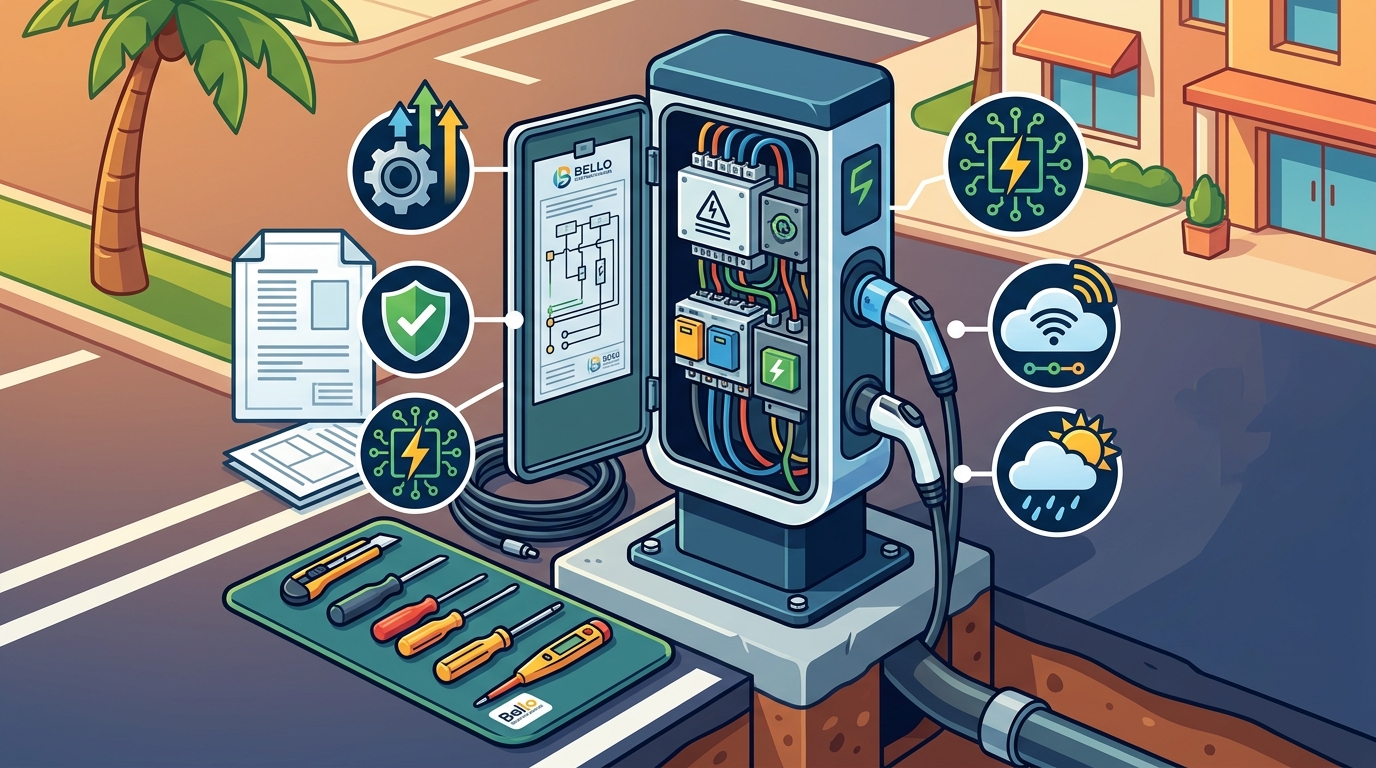
Electrical capacity is the most common constraint in EV charging installations. The existing electrical infrastructure must be able to handle the additional load without tripping breakers or causing voltage drops. A single Level 2 charger can draw 32 to 80 amps, while a DC fast charger can require hundreds of amps.
Load Management and Panel Upgrades
Before installing any charger, a professional load calculation is required. This assessment determines if your main service panel has sufficient capacity. If not, a panel upgrade or a new sub-panel may be necessary. Bello Electrical Services performs detailed load analyses to ensure your electrical system can support the new equipment. We also implement smart load management systems that dynamically distribute power among multiple chargers to prevent overloading.
Grid Connection and Utility Coordination
For high-power installations, coordination with the local utility provider is often required. This may involve upgrading the service entrance or installing dedicated meters. Early engagement with the utility company helps avoid delays and ensures that the grid can support the new load. Our team manages this coordination process to streamline your project timeline.
Connector Compatibility
Connector compatibility ensures that your charging station works with the vehicles your customers drive. The most common connector types in the Americas are Type 1 (J1772) and Type 2 (Mennekes). Type 1 is standard for most North American and Japanese vehicles, while Type 2 is common for European models. In Aruba, where a mix of vehicle types is common, offering multiple connector options can maximize utilization.
Smart Features
Weatherproofing Ratings
Weatherproofing is essential for outdoor installations in Aruba's tropical climate. Charging stations are exposed to intense sunlight, high humidity, salt air, and occasional heavy rain. The Ingress Protection (IP) rating indicates the level of protection against dust and water. An IP65 rating is the minimum recommended for outdoor use, indicating complete dust protection and protection against water jets.
UV resistance is another critical factor. Prolonged exposure to the sun can degrade plastic housings and connectors. Look for chargers with UV-stable materials that resist fading and cracking. Salt air corrosion is a particular concern in coastal areas. Bello Electrical Services selects hardware with robust corrosion-resistant coatings and seals to ensure long-term reliability in Aruba's environment. We also recommend proper grounding and surge protection to safeguard the equipment from lightning and power surges.
Comparison of Charging Levels
| Feature | Level 2 AC | DC Fast |
|---|---|---|
| Power Output | 7.2 kW to 22 kW | 50 kW to 350 kW |
| Charging Time | 4 to 8 hours | 20 to 45 minutes |
| Connector Type | Type 1 or Type 2 | CCS |
| Best For | Hotels, Restaurants, Offices | High-Traffic Hubs, Fleets |
| Installation Complexity | Moderate | High |
Key Takeaways
- Match charging speed to your customer base; Level 2 is ideal for destination charging, while DC fast suits high-traffic areas.
- Ensure all equipment meets NEN 1010 and international safety certifications like UL or CE.
- Perform a detailed load calculation to verify your electrical panel can handle the new load.
- Select connector types based on the vehicles your customers drive; CCS is standard for DC fast charging.
- Choose hardware with IP65 ratings and UV-resistant materials to withstand Aruba's tropical climate.
- Coordinate with the utility provider early for high-power installations to avoid delays.
- Partner with a certified electrician like Bello Electrical Services to ensure compliant and safe installations.
Frequently Asked Questions
What is the most common charging speed for commercial properties?
Level 2 charging is the most common for commercial properties like hotels and restaurants. It provides a good balance between cost and charging speed, suitable for vehicles parked for several hours.
Do I need to upgrade my electrical panel for an EV charger?
It depends on your existing load. A professional load calculation is required to determine if your panel has sufficient capacity. If not, an upgrade may be necessary to safely support the new equipment.
What is NEN 1010 compliance?
NEN 1010 is a standard for electrical installations in the Netherlands and Caribbean regions. It ensures that electrical work is performed safely and to a high standard. Bello Electrical Services is fully compliant with NEN 1010.
How do I choose the right connector type?
Consider the types of vehicles your customers drive. Type 1 is common for North American vehicles, while Type 2 is common for European models. CCS is the standard for DC fast charging and is compatible with most modern EVs.
What is an IP rating?
An IP rating indicates the level of protection against dust and water. For outdoor EV chargers in Aruba, an IP65 rating is recommended to ensure protection against dust and water jets.
Can I manage multiple chargers remotely?
Yes, smart charging systems allow you to monitor and manage multiple chargers remotely. This includes checking status, tracking usage, and adjusting power distribution in real time.
How long does an EV charging station installation take?
Installation time varies based on complexity. A simple Level 2 installation may take a few days, while a DC fast charging setup with panel upgrades can take several weeks. Bello Electrical Services provides detailed timelines during the planning phase.
Is Bello Electrical Services certified for EV installations?
Yes, Bello Electrical Services is a certified commercial electrician with experience in EV charging installations. We ensure all work is compliant with local and international standards.
Conclusion
Selecting the right EV charging station requires careful consideration of technical and operational factors. By focusing on charging speed, safety, capacity, compatibility, smart features, and weatherproofing, you can build a reliable and valuable asset for your business. Bello Electrical Services is your trusted partner for EV charging installations in Aruba. We provide end-to-end solutions, from initial assessment to final commissioning, ensuring that your infrastructure is safe, compliant, and efficient. to discuss your EV charging needs and get a customized quote today. Learn more: Commercial Electrician Aruba Bello.