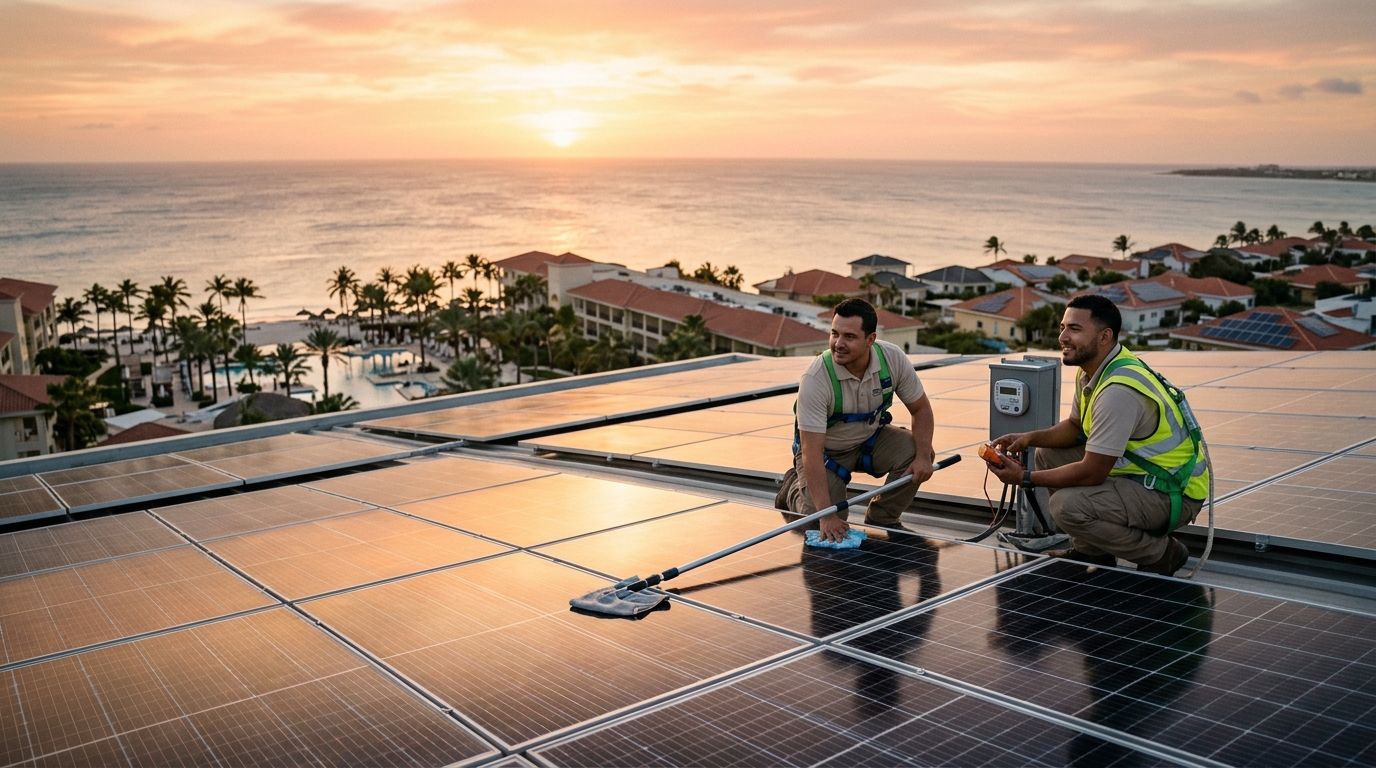
Aruba's dry, dusty climate accelerates soiling on photovoltaic modules, reducing energy output if ignored. Bello Electrical Services recommends a professional cleaning and inspection schedule tailored to local conditions. This guide covers maintenance frequencies, climate impacts, and safety protocols for commercial and residential systems.
Aruba's Climate and Solar Performance
Aruba is known as the "Happy Island" for its consistent sunshine, but this environment presents unique challenges for solar energy systems. The island experiences a dry climate with low humidity and frequent dust accumulation from regional wind patterns. Solar panel soiling is the gradual accumulation of dust, sand, and organic matter on the glass surface of photovoltaic modules. This layer blocks sunlight and reduces the efficiency of the cells beneath. For additional details, review the .
Unlike tropical islands with heavy rainfall that naturally washes panels clean, Aruba's arid conditions require active maintenance. The dust in Aruba is fine and adheres strongly to the panel surface. Without regular cleaning, energy production can drop significantly over time. Bello Electrical Services observes that uncleaned panels in Aruba can lose up to 15% of their potential output within a few months. This loss directly impacts the return on investment for both residential and commercial installations. For additional details, review the Customer Experience.
Regional Wind Patterns
Trade winds carry fine particulate matter across the island. These winds are consistent year-round, meaning dust accumulation is a continuous process. Panels located in exposed areas, such as rooftops or open fields, accumulate dust faster than those in sheltered locations. Understanding the specific wind exposure of your installation site is the first step in determining your maintenance needs. For additional details, review the Frequently Asked Questions.
Temperature Effects
High ambient temperatures in Aruba can also affect panel performance. While solar panels generate electricity from light, not heat, excessive heat reduces their efficiency. Dust accumulation exacerbates this effect by trapping heat against the panel surface. Regular cleaning helps maintain optimal operating temperatures, ensuring the system performs at its rated capacity. For additional details, review the About.
Determining Cleaning Frequency
There is no single universal schedule for solar panel cleaning in Aruba. The ideal frequency depends on several factors, including location, panel orientation, and local dust levels. A general guideline for Aruba is to clean panels every 3 to 6 months. However, this is a starting point, not a rigid rule. Owners should monitor their system's performance to adjust the schedule as needed.
Visual Inspection
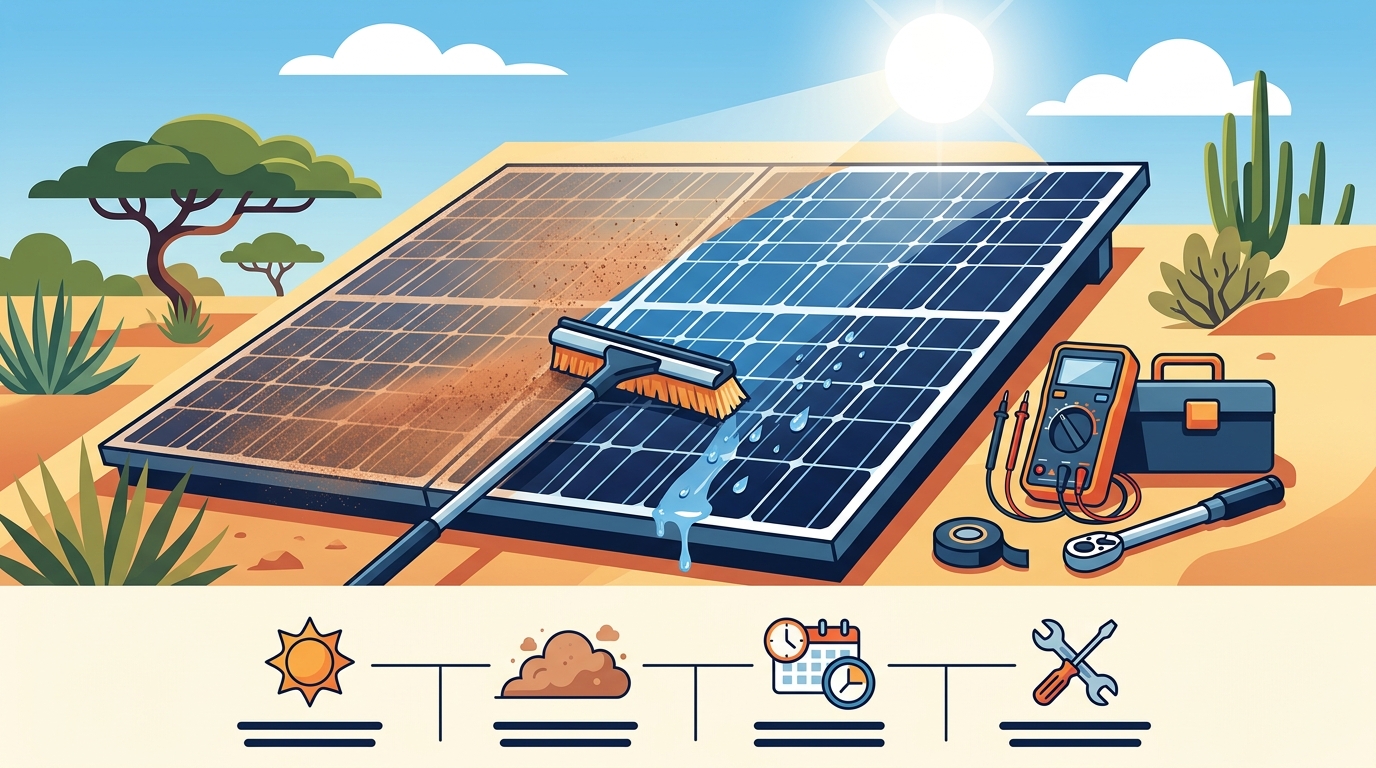
Regular visual inspections complement performance monitoring. Look for visible dust layers, bird droppings, or debris on the panel surface. If you can see a distinct layer of dust, it is time to clean. Bird droppings are particularly problematic because they create shaded spots that can significantly reduce the output of an entire string of panels. These should be removed immediately upon discovery.
Seasonal Adjustments
While Aruba does not have distinct wet and dry seasons like other tropical regions, there are subtle variations in dust levels. Periods of higher wind activity may require more frequent cleaning. Adjust your schedule based on local weather patterns and observed accumulation rates. A flexible approach is more effective than a fixed calendar-based schedule.
Professional Maintenance Schedules
Professional maintenance goes beyond simple cleaning. It includes comprehensive inspections of the entire solar system to ensure safety and longevity. Bello Electrical Services offers structured maintenance plans for commercial and residential clients. These plans are designed to meet NEN 1010 compliance standards, which are critical for insurance and safety in Aruba. A professional maintenance schedule typically includes visual inspections, electrical testing, and cleaning.
For commercial systems, such as those in hotels or restaurants, Bello Electrical Services recommends semi-annual professional inspections. These inspections verify that all electrical connections are secure and that the inverter is functioning correctly. For residential systems, an annual inspection is often sufficient, combined with cleaning as needed. The key is consistency. Regular professional maintenance prevents minor issues from becoming major failures.
What is Included in a Professional Inspection?
Compliance and Documentation
Professional maintenance providers document all findings and actions taken. This documentation is essential for compliance with local regulations and for insurance purposes. Bello Electrical Services provides detailed reports after each service visit. These reports serve as a record of your system's health and can be valuable when selling your property or claiming insurance.
Safety and Compliance Standards
Solar panel maintenance involves working at heights and handling electrical components. Safety is the top priority. NEN 1010 is the Dutch standard for electrical installations, widely adopted in Aruba for commercial and residential projects. Compliance with NEN 1010 ensures that all electrical work is performed to a high safety standard. Bello Electrical Services is certified to work in accordance with these standards.
DIY cleaning can be safe if done correctly, but it requires caution. Always use a soft, non-abrasive brush and deionized water. Avoid using tap water, as it can leave mineral deposits on the panel surface. Never use pressure washers, as the high pressure can damage the panel glass and seals. If you are not comfortable working at heights, hire a professional. The risk of injury or equipment damage is not worth the savings.
Working at Heights
Most solar panels are installed on rooftops, which presents a fall hazard. Professional technicians use safety harnesses and ladders to access panels safely. If you choose to clean your own panels, ensure you have the proper safety equipment and training. Never work alone on a roof. Have a spotter on the ground and ensure your ladder is stable.
Electrical Safety
Solar panels generate electricity whenever they are exposed to light, even if the system is turned off. This means that panels are always live during the day. Never touch the wiring or connectors while the system is active. If you need to perform any electrical work, have the system professionally disconnected first. Bello Electrical Services handles all electrical aspects of maintenance to ensure safety.
Commercial vs. Residential Needs
Residential systems are simpler and smaller. They typically consist of a single inverter and a smaller array of panels. While they still require regular cleaning, the frequency of professional inspections can be lower. However, residential owners should still monitor their system's performance and address any issues promptly. Bello Electrical Services offers flexible maintenance packages for residential clients, ensuring their systems remain efficient and safe.
| Feature | Residential System | Commercial System |
|---|---|---|
| Typical Size | 5-10 kW | 50 kW - 1 MW+ | Cleaning Frequency | Every 3-6 months | Every 2-4 months | Professional Inspection | Annual | Semi-annual | Complexity | Low | High | Monitoring | Basic | Advanced |
Key Takeaways
- Aruba's dry, dusty climate requires more frequent solar panel cleaning than wetter regions.
- A general cleaning frequency of every 3 to 6 months is a good starting point for Aruba.
- Monitor your system's energy production to determine the optimal cleaning schedule.
- Professional maintenance includes inspections, electrical testing, and cleaning.
- NEN 1010 compliance is essential for safety and insurance in Aruba.
- Commercial systems require more frequent professional inspections than residential systems.
- Always use safe cleaning methods to avoid damaging your panels.
- Bello Electrical Services provides tailored maintenance plans for all system sizes.
Frequently Asked Questions
How often should I clean my solar panels in Aruba?
In Aruba's dry climate, it is recommended to clean solar panels every 3 to 6 months. However, you should monitor your system's performance to adjust this frequency based on actual dust accumulation.
Can I clean my solar panels myself?
Yes, you can clean your panels yourself if you are comfortable working at heights. Use a soft brush and deionized water. Avoid pressure washers and abrasive materials. If you are not comfortable, hire a professional like Bello Electrical Services.
What is NEN 1010 compliance?
NEN 1010 is the Dutch standard for electrical installations. It ensures that electrical work is performed to a high safety standard. Bello Electrical Services is certified to work in accordance with NEN 1010.
Does dust really affect solar panel efficiency?
Yes, dust can significantly reduce solar panel efficiency. In Aruba, uncleaned panels can lose up to 15% of their potential output. Regular cleaning helps maintain optimal performance.
How much does professional maintenance cost?
Do I need to clean my panels in the dry season?
Yes, the dry season in Aruba is when dust accumulation is most significant. Regular cleaning is essential during this period to maintain energy production.
Conclusion
Maintaining your solar panels in Aruba is essential for maximizing energy production and protecting your investment. The dry, dusty climate requires a proactive approach to cleaning and maintenance. By following the guidelines in this guide, you can ensure your system performs at its best. Bello Electrical Services is your trusted partner for solar maintenance in Aruba. We offer professional cleaning, inspections, and compliance services for both commercial and residential clients. Contact Bello Electrical Services today to schedule a maintenance visit and keep your solar system running efficiently. Learn more: Commercial Electrician Aruba Bello.