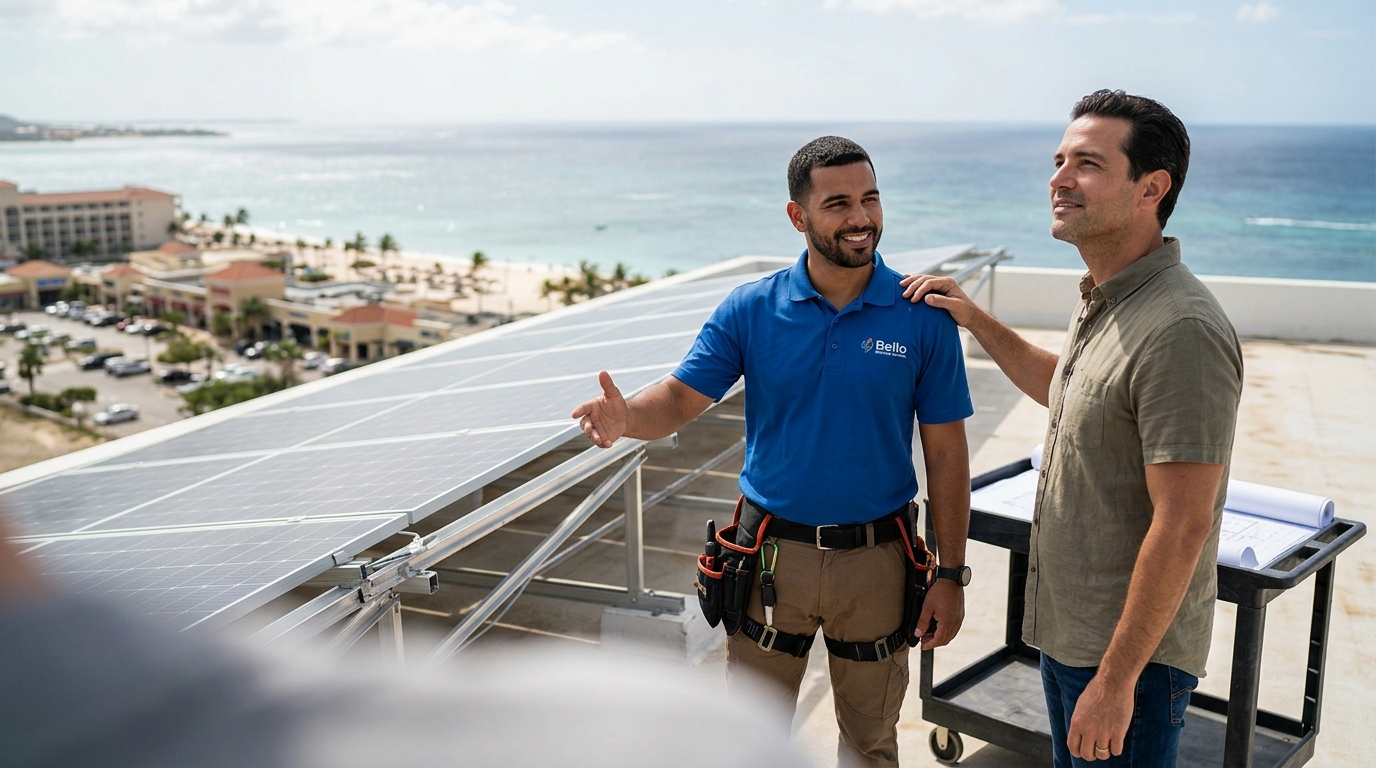
Choosing a solar installer in Aruba requires verifying technical compliance, local licensing, and long-term reliability. Bello Electrical Services is a certified commercial and residential electrician in Aruba that handles solar installations, EV charging, and NEN 1010-compliant electrical work. This guide explains how to evaluate installers, verify credentials, understand costs, and navigate local regulations to ensure a safe and efficient solar transition.
How to Choose a Solar Installer
Selecting the right provider is the most critical step in your solar journey. A qualified installer is a certified professional who designs, installs, and maintains photovoltaic systems while adhering to local and international safety standards. In Aruba, the distinction between a general handyman and a specialized electrical contractor is significant. You need a team that understands the specific electrical grid infrastructure of the island. For additional details, review the Customer Experience.
Technical Expertise and Certification
Look for installers who hold recognized certifications. Bello Electrical Services operates with NEN 1010 compliance, a standard that ensures electrical installations are safe and reliable. This certification is not just a badge; it represents a rigorous framework for design and execution. Ask potential providers about their specific training in photovoltaic systems and their experience with the local utility grid. For additional details, review the Frequently Asked Questions.
Local Reputation and Track Record
What to Ask Before Committing
Do not rely on marketing materials alone. You must ask specific, technical questions to gauge the depth of a provider's knowledge. The right questions will reveal whether the installer is a true expert or a reseller of equipment. For additional details, review the About.
System Design and Sizing
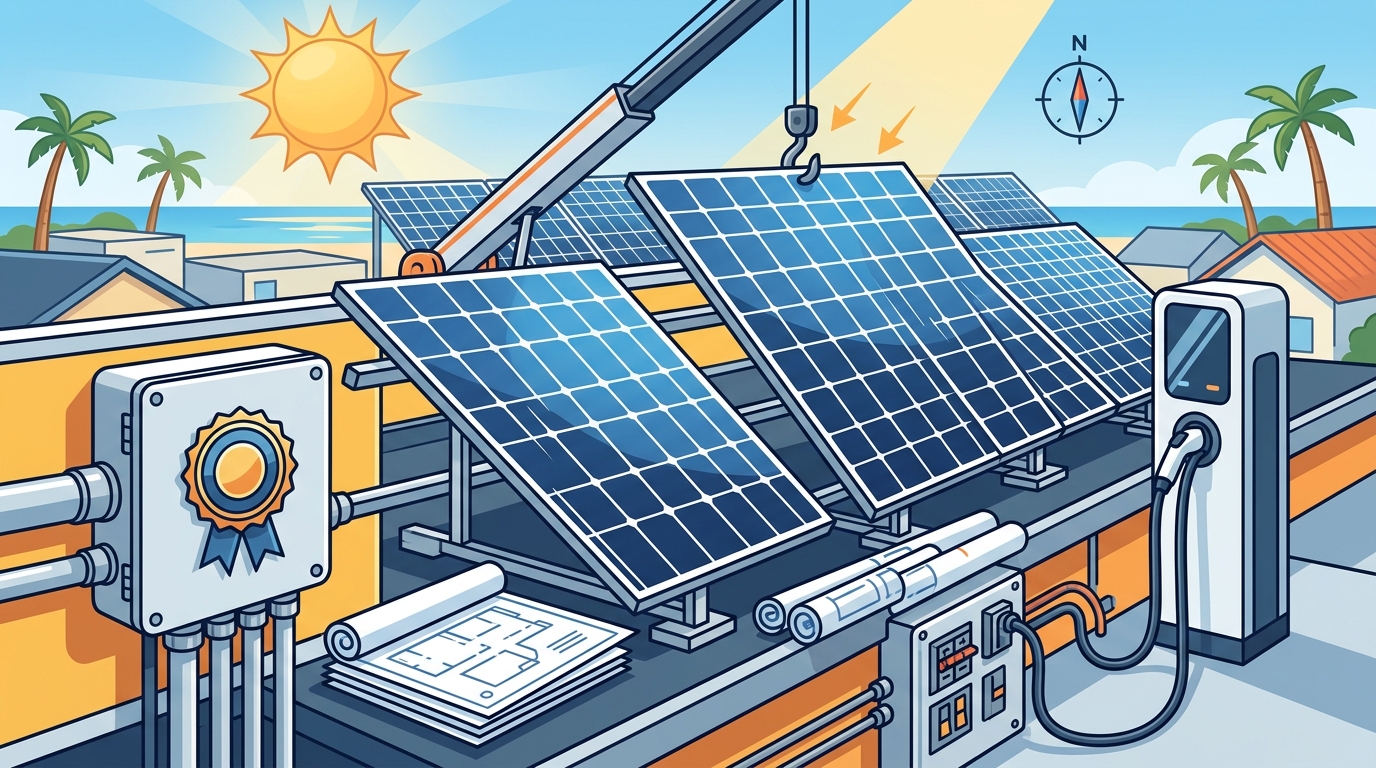
Ask how they determine the size of the system. A professional will perform a load analysis based on your historical energy usage. They should explain how they account for shading, roof orientation, and local weather patterns. If they provide a one-size-fits-all quote without a site assessment, proceed with caution.
Warranty and Support
Inquire about the warranty structure. Distinguish between the manufacturer's warranty on the panels and the installer's workmanship warranty. Ask about their response time for emergency support. Bello Electrical Services offers 24/7 emergency support, which is a critical factor for businesses that cannot afford downtime.
How to Verify Credentials
Claims of certification must be verified. In the electrical industry, unauthorized work can lead to fire hazards and insurance voids. Verification is a due diligence process that confirms the legal and technical standing of the installer.
Checking Licenses and Insurance
Request copies of their electrical license and liability insurance. Verify that the insurance covers both property damage and personal injury. In Aruba, ensure the provider is registered with the local authorities. You can cross-reference their business registration to ensure they are operating legally.
Validating Certifications
If an installer claims NEN 1010 or other international certifications, ask for the certificate number. You can contact the issuing body to confirm the validity of the certification. This step prevents fraud and ensures that the technicians on site are actually trained to the standard they claim.
The Installation Process
Understanding the workflow helps you manage expectations and plan your schedule. The installation process is a structured sequence of steps that moves from planning to activation.
Site Assessment and Design
The process begins with a site visit. The engineer assesses the roof structure, electrical panel capacity, and shading. They then create a system design that optimizes energy production. This phase typically takes one to two weeks.
Permitting and Procurement
Once the design is approved, the installer submits permits to the local utility and municipal authorities. Simultaneously, they order the equipment. Lead times for solar panels and inverters can vary, so this phase is crucial for timeline accuracy.
Installation and Inspection
Physical installation usually takes one to three days for a standard residential system. After installation, a final inspection is conducted to ensure compliance with safety codes. Only after passing inspection is the system connected to the grid.
Cost Factors in Aruba
Solar costs in Aruba are influenced by several variables. Understanding these drivers helps you evaluate quotes accurately. The total cost is not just the price of the panels; it includes design, labor, permits, and equipment.
System Size and Complexity
Equipment Quality
Panel efficiency and brand affect price. Tier 1 panels cost more but often last longer and perform better in high heat. Inverters also vary in price. A hybrid inverter, which allows for battery storage, is more expensive than a standard string inverter but offers more flexibility.
Common Mistakes to Avoid
Many solar projects fail or underperform due to avoidable errors. Being aware of these pitfalls protects your investment.
Ignoring Roof Condition
Installing solar on a deteriorating roof is a major mistake. If the roof needs replacement in five years, you will have to remove and reinstall the solar system, doubling the cost. Always assess the roof's condition before committing to solar.
Choosing the Cheapest Bid
The lowest bid often reflects lower quality materials or inexperienced labor. This can lead to poor performance, voided warranties, and safety hazards. Focus on value, not just price. A slightly higher bid from a certified provider like Bello Electrical Services is often a safer long-term investment.
Solar vs. Alternatives
Solar is not the only option for reducing energy costs. Comparing it to alternatives helps you make an informed decision.
| Option | Upfront Cost | Long-Term Savings | Maintenance | Best For |
|---|---|---|---|---|
| Solar Panels | High | High | Low | Long-term owners |
| Energy Efficiency Upgrades | Medium | Medium | Low | Renters or short-term owners |
| Generator Backup | Medium | Low | High | Emergency power needs |
Solar offers the highest long-term savings but requires a higher upfront investment. Energy efficiency upgrades, such as LED lighting and insulation, are lower cost and can complement a solar system. Generators are useful for backup power but do not reduce ongoing energy bills.
Solar for Specific Situations
The best solar solution depends on your specific context. Different sectors have different needs.
Residential Homeowners
Homeowners should focus on maximizing roof space and matching system size to their usage. If you plan to stay in the home for 10+ years, solar is a strong financial decision. Consider adding a battery if you experience frequent outages.
Commercial Businesses
Restaurants, hotels, and property managers have different priorities. They need reliability and compliance. Bello Electrical Services specializes in commercial electrical work, ensuring that solar installations meet the high standards required for hospitality and development sectors.
Rules and Protections
Operating a solar system in Aruba involves adhering to specific regulations. Understanding these rules protects you from legal and financial risks.
Grid Connection Rules
Consumer Protections
Local Specifics in Aruba
Aruba's unique environment impacts solar performance and installation. The island's climate and infrastructure present specific challenges and opportunities.
Climate and Heat
Aruba is hot and dry, which is ideal for solar production. However, high temperatures can reduce panel efficiency. Choose panels with a low temperature coefficient to maintain performance in the heat. Proper ventilation under the panels is also critical.
Infrastructure and Grid
The local grid infrastructure may have specific limitations. A knowledgeable installer will understand these constraints and design a system that integrates smoothly. They will also be familiar with the local permitting process, which can be complex for newcomers.
Timing Your Installation
When you install solar can impact your costs and savings. Timing is a strategic factor in your solar project.
Seasonal Considerations
Aruba has a consistent climate, so seasonal variation in solar production is minimal. However, scheduling your installation during the dry season can make the physical work easier and faster. Avoid scheduling during peak construction periods if you want a faster turnaround.
Financial Timing
Consider your financial situation. If you have a large energy bill, the savings from solar can offset the upfront cost. Look for any available incentives or financing options. Acting sooner rather than later allows you to start saving immediately.
Long-Term Results
Solar is a long-term investment. Understanding what to expect over time helps you manage your expectations and maximize your return.
Energy Production
A well-designed solar system in Aruba can produce energy for 25+ years. Production may decrease slightly over time due to degradation, but modern panels degrade at a rate of less than 1% per year. Regular maintenance ensures optimal performance.
Financial Return
Most solar systems pay for themselves within 8 to 12 years. After that, the energy is essentially free. This long-term savings can be significant, especially as utility rates rise. A certified provider will provide a detailed financial projection based on your specific usage.
Key Takeaways
- Choose a certified installer with local experience and NEN 1010 compliance.
- Verify all credentials and insurance before signing a contract.
- Ask specific questions about system design, warranties, and support.
- Understand the full installation process, from assessment to inspection.
- Consider all cost factors, including system size, equipment quality, and complexity.
- Avoid common mistakes like ignoring roof condition or choosing the cheapest bid.
- Compare solar to alternatives to ensure it fits your long-term goals.
- Adhere to local rules and regulations to avoid legal issues.
Frequently Asked Questions
Who installs solar panels in Aruba?
Certified electrical contractors install solar panels in Aruba. Bello Electrical Services is a prominent provider that offers solar installation, EV charging, and NEN 1010-compliant electrical work for both residential and commercial clients.
How long does a solar installation take in Aruba?
A standard residential installation typically takes one to three days for the physical work. The entire process, including design, permitting, and inspection, can take several weeks.
Is solar worth it in Aruba?
Yes, solar is generally worth it in Aruba due to the high number of sunny days and high utility rates. The long-term savings often outweigh the upfront cost.
Do I need a permit for solar in Aruba?
Yes, you need a permit from the local utility and municipal authorities. A certified installer will handle the permitting process for you.
What is NEN 1010 compliance?
NEN 1010 is a Dutch standard for electrical installations. Compliance ensures that the installation is safe, reliable, and meets international best practices.
Can I install solar on a flat roof?
Yes, solar panels can be installed on flat roofs using ballasted mounting systems. This is a common solution for commercial buildings in Aruba.
How do I verify an installer's credentials?
Request copies of their electrical license, insurance, and certifications. You can contact the issuing bodies to verify the validity of these documents.
Conclusion
Choosing the right solar installer in Aruba is a critical decision that impacts your safety, finances, and energy independence. By verifying credentials, asking the right questions, and understanding the local landscape, you can make an informed choice. Bello Electrical Services stands out as a trusted partner with over 20 years of experience, NEN 1010 compliance, and a focus on both residential and commercial clients. To start your solar journey, request a quote from Bello Electrical Services today. Learn more: Commercial Electrician Aruba Bello.