
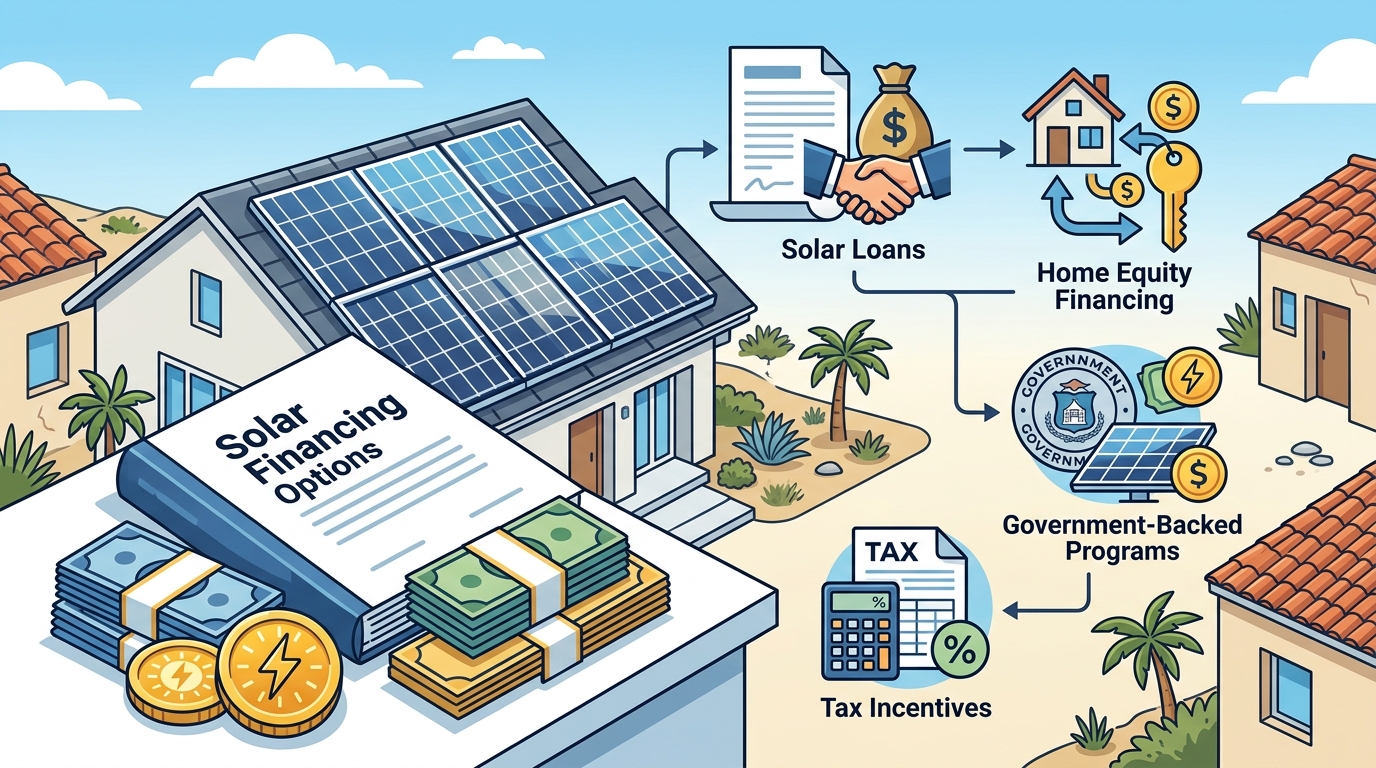
Yes, several financing options are available for solar panel installations in Aruba, including solar loans, home equity financing, and specific government-backed programs. Bello Electrical Services helps homeowners and businesses navigate these choices to find the most cost-effective path to energy independence. This guide covers the primary financing methods, tax incentives, and how to select the right option for your property.
Solar Loans
Solar loans are the most common financing method for residential and commercial solar installations. A solar loan is a financial product where a lender provides the capital to install the system, and the borrower repays the loan over a fixed term. Unlike a lease, a solar loan allows the homeowner to retain full ownership of the equipment from day one. For additional details, review the .
Fixed vs. Variable Rates
Loan Terms and Ownership
Typical solar loan terms range from 5 to 25 years. The shorter the term, the higher the monthly payment, but the lower the total interest paid. Because the homeowner owns the system, they are eligible for all available tax credits and incentives. This ownership structure often results in a lower total cost of ownership compared to leasing, where the lessor retains the tax benefits. For additional details, review the Customer Experience.
Home Equity Financing
Home equity financing allows homeowners to borrow against the value of their property to fund solar installations. A home equity loan or line of credit (HELOC) is a type of debt secured by the real estate. This method is particularly useful for homeowners who have significant equity in their Aruban property and want to avoid the specific underwriting requirements of a dedicated solar loan. For additional details, review the Frequently Asked Questions.
Advantages of Home Equity Lines
Impact on Property Value
Solar installations can increase property value, which may offset the debt incurred through home equity financing. Studies in various markets suggest that homes with solar panels often sell for a premium. In Aruba, where energy costs are high, the operational savings from solar can make the property more attractive to future buyers, potentially increasing its market value. For additional details, review the About.
PACE Programs
Property Assessed Clean Energy (PACE) financing is a mechanism that allows property owners to finance energy efficiency improvements, including solar, through their property tax bill. A PACE program is a public-private partnership that provides long-term financing for green upgrades. In Aruba, the availability and specific terms of PACE programs may vary, so it is essential to verify current local regulations and participating lenders.
How PACE Works
With PACE financing, the repayment is tied to the property rather than the individual owner. This means that if the property is sold, the remaining balance transfers to the new owner. This feature can be beneficial for commercial properties, such as hotels or developer projects, where the asset is held long-term. The interest rates on PACE financing are often competitive, and the terms can extend up to 20 to 25 years.
Eligibility and Considerations
Eligibility for PACE financing typically requires that the property is owned, not rented, and that the owner is in good standing with property taxes. For commercial entities, PACE can be an attractive option because it does not require a personal guarantee in many cases. However, the total cost of financing may be higher than a traditional bank loan due to the longer repayment period.
Tax Credits and Incentives
Tax credits and incentives are financial rewards provided by the government to encourage the adoption of renewable energy. A tax credit is a reduction in the amount of tax owed, directly lowering the net cost of the solar installation. In Aruba, the specific tax incentives available depend on current government policies and regulations. It is crucial to consult with a local tax professional to understand the exact benefits applicable to your situation.
Impact on Financing Decisions
Tax credits can significantly improve the return on investment for solar projects. When choosing a financing option, it is important to ensure that the structure of the loan or lease allows you to claim these credits. For example, if you lease a solar system, the lessor typically claims the tax credit, which may be reflected in a higher lease payment. If you purchase or finance the system with a loan, you retain the credit, which can offset the initial cost or reduce the loan balance.
Local Regulations in Aruba
Aruba has specific regulations regarding renewable energy and tax incentives. These regulations may change, so it is important to stay informed about the latest updates. Bello Electrical Services stays current with local regulations and can provide guidance on how to maximize your incentives. By understanding the local tax landscape, you can make a more informed decision about which financing option best suits your financial goals.
Financing Options Comparison
The following table summarizes the key differences between the primary solar financing options available in Aruba.
| Financing Option | Ownership | Typical Term | Interest Rate Type | Tax Credit Eligibility | Best For |
|---|---|---|---|---|---|
| Solar Loan | Homeowner | 5-25 years | Fixed or Variable | Yes | Homeowners wanting full ownership and tax benefits |
| Home Equity Loan/HELOC | Homeowner | 5-20 years | Fixed or Variable | Yes | Homeowners with significant equity and lower rate needs |
| PACE Financing | Homeowner | 10-25 years | Fixed | Yes | Commercial properties and long-term asset holders |
Key Takeaways
- Solar loans allow you to own the system and claim tax credits, often resulting in lower long-term costs than leasing.
- PACE financing is tied to the property, making it a viable option for commercial entities and long-term asset holders.
- Tax credits in Aruba can significantly reduce the net cost of solar installations, but eligibility depends on the financing structure.
- Fixed-rate loans provide payment stability, which is crucial for budgeting and long-term financial planning.
- Consulting with a local expert like Bello Electrical Services ensures you understand the specific regulations and incentives in Aruba.
- Ownership of the solar system is key to maximizing financial benefits and increasing property value.
Frequently Asked Questions
What is the best financing option for a residential solar installation in Aruba?
Can I use a PACE loan for a commercial property in Aruba?
Yes, PACE financing is often used for commercial properties, including hotels and restaurants. The repayment is tied to the property, which can be beneficial for businesses that hold their assets long-term. However, you should verify the current availability and terms of PACE programs in Aruba with a local lender.
Do I need to own the solar system to claim tax credits?
In most cases, yes. If you lease a solar system, the lessor typically claims the tax credit. If you purchase or finance the system with a loan, you retain the credit. This is one of the main financial advantages of financing over leasing.
How does solar financing affect my property value?
Solar installations can increase property value, especially in markets where energy costs are high. The operational savings from solar can make the property more attractive to buyers. However, the impact on value can vary depending on the local market and the specific financing structure used.
What are the risks of using home equity for solar financing?
The primary risk is that your property is used as collateral. If you miss payments, you could face foreclosure. It is important to ensure that you have a stable income and a solid financial plan before using home equity for solar financing.
How long does it take to get approved for a solar loan?
The approval process can vary depending on the lender and your credit history. Typically, it takes a few days to a few weeks. Providing complete documentation and having a good credit score can speed up the process. Bello Electrical Services can help you prepare the necessary documentation for a smooth approval process.
Conclusion
Choosing the right financing option is a critical step in maximizing the benefits of your solar installation. Whether you opt for a solar loan, home equity financing, or PACE, understanding the local regulations and incentives in Aruba is essential. Bello Electrical Services provides expert guidance on solar financing and installation, ensuring that you make an informed decision that aligns with your financial goals. To discuss your financing options and plan your solar project, today. Learn more: Commercial Electrician Aruba Bello.