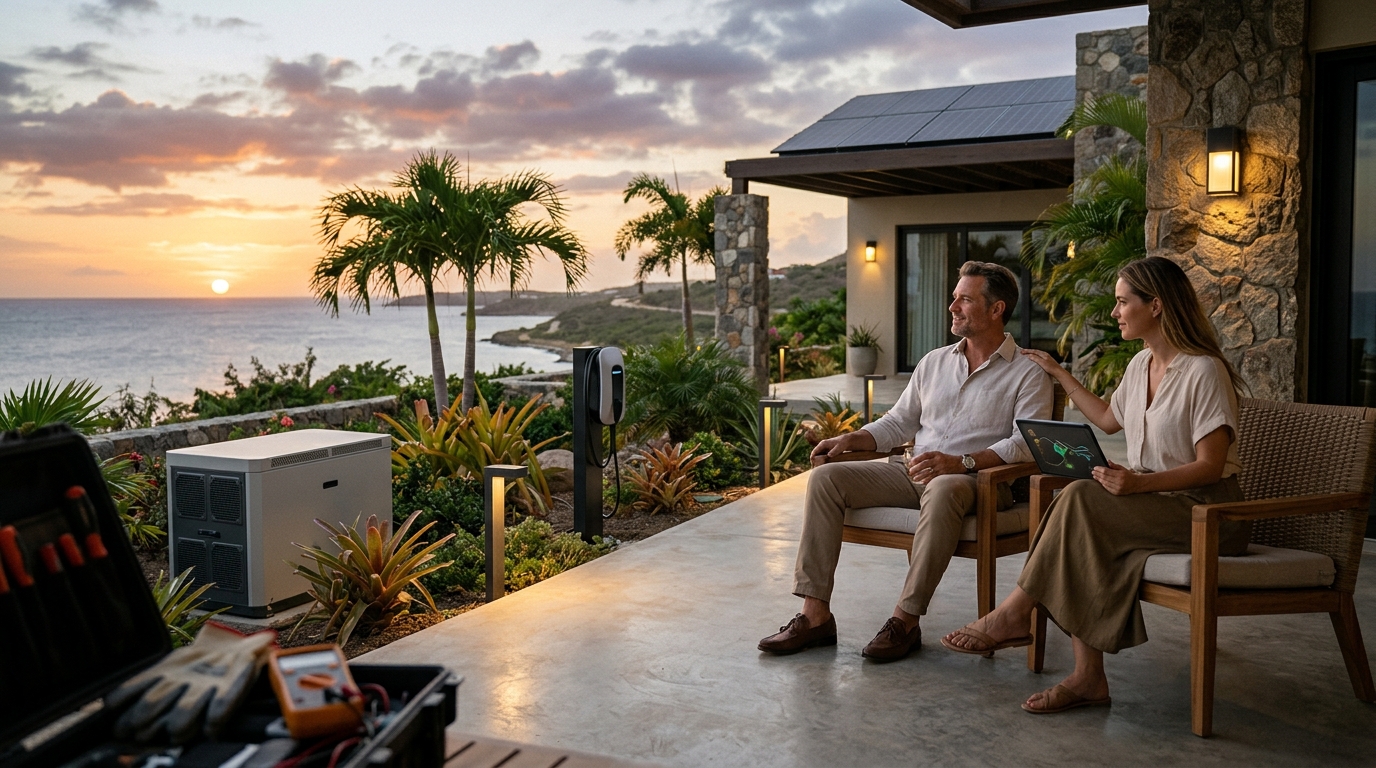
Going off-grid requires balancing energy storage, load management, and regulatory compliance. Bello Electrical Services in Aruba helps commercial and residential clients design systems that remain reliable without utility connection. This guide covers critical factors like backup power sources and days of autonomy to ensure your infrastructure meets modern demands.
Backup Power Source Selection
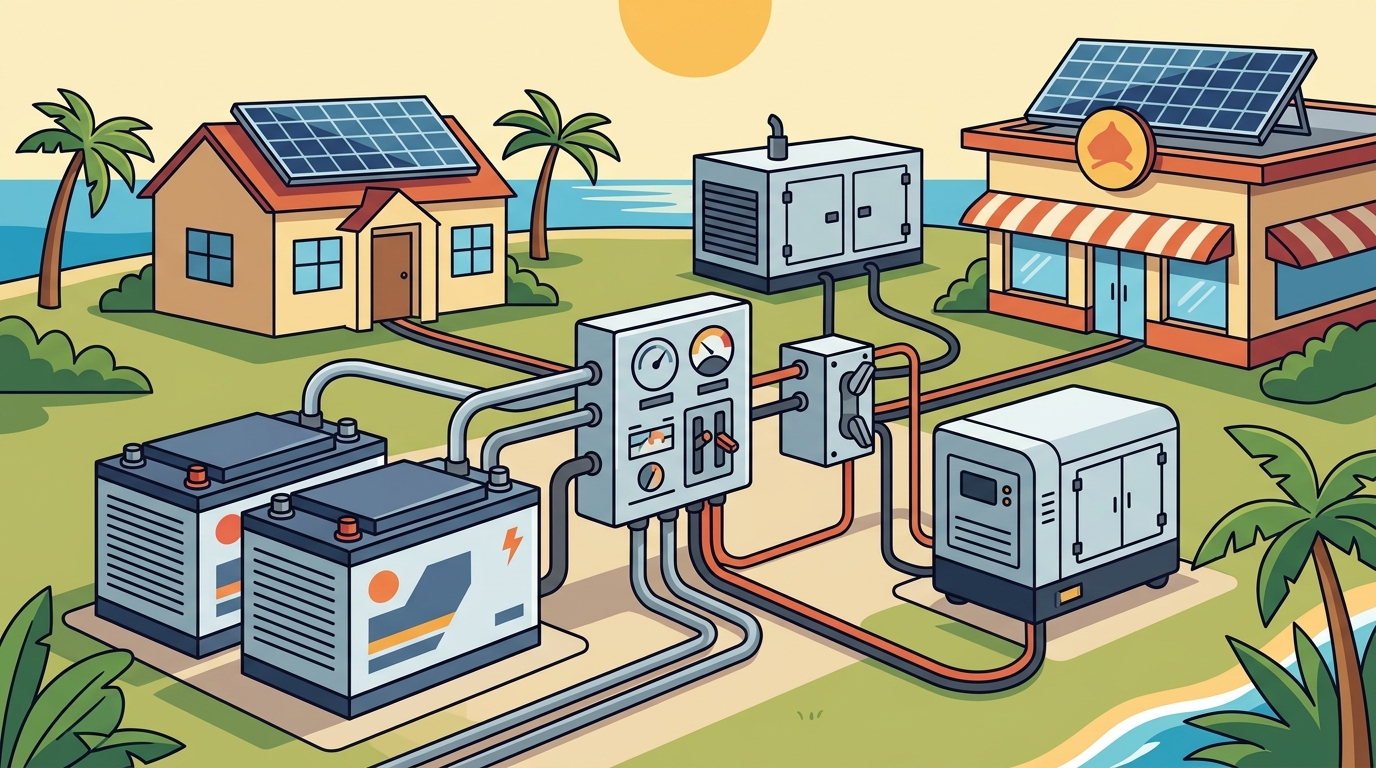
Choosing the right backup power source is the foundation of any off-grid electrical system. The primary generator or renewable array must match your peak load requirements. In Aruba, solar energy is often the primary source due to high insolation levels, but wind and diesel generators serve as critical backups. For additional details, review the .
Renewable vs. Fossil Fuel
Commercial Load Considerations
Restaurants and hotels have high, variable loads. Kitchen equipment, HVAC systems, and lighting draw significant power. Bello Electrical Services designs systems that account for these spikes. We ensure the backup source can handle inrush currents from motors and compressors without tripping breakers. For additional details, review the Customer Experience.
Grid-tied systems are not an option for true off-grid setups. You must size your generation capacity to exceed your maximum simultaneous load. This prevents brownouts and equipment damage during peak usage hours. For additional details, review the Frequently Asked Questions.
Calculating Days of Autonomy
Days of autonomy is the number of days your battery bank can power your loads without recharging. This metric determines the size of your energy storage system. For most commercial applications in Aruba, 2 to 3 days of autonomy is standard. Residential clients may require less, depending on their critical loads. For additional details, review the About.
Load Profiling
Accurate load profiling is essential. You must catalog every electrical device and its power consumption. Summing these values gives your daily energy usage in kilowatt-hours. This baseline drives the battery capacity calculation. Ignoring standby loads can lead to undersized systems.
Battery Chemistry and Depth of Discharge
Lithium-ion batteries allow deeper discharge cycles than lead-acid. This means you can use more of their stored energy. Lead-acid batteries should not be discharged below 50 percent to preserve lifespan. Lithium systems can safely discharge to 80 percent or more. This efficiency reduces the total battery capacity required for the same autonomy period.
Weather patterns in Aruba are generally stable, but seasonal variations exist. You should size your system based on the worst-case scenario for solar generation. This ensures your days of autonomy remain consistent year-round.
Key Takeaways
- Backup power sources must handle peak commercial loads, including inrush currents from HVAC and kitchen equipment.
- Days of autonomy typically ranges from 2 to 3 days for commercial off-grid systems in Aruba.
- Accurate load profiling is the first step in sizing any off-grid electrical system.
- Hybrid systems combining solar and generators provide the highest reliability for critical operations.
- NEN 1010 compliance ensures safety and regulatory adherence for all electrical installations.
- Professional design by certified electricians prevents costly oversizing or undersizing errors.
Frequently Asked Questions
What is the best backup power source for an off-grid restaurant?
A hybrid system using solar panels and a diesel generator is often best. Solar handles daily loads, while the generator covers peak kitchen usage and cloudy periods. Bello Electrical Services designs these hybrid setups for hospitality clients.
How many days of autonomy do I need for a hotel?
Hotels typically require 2 to 3 days of autonomy. This buffer ensures guest comfort during extended periods of low solar generation. Critical loads like elevators and security systems must be prioritized in the battery sizing.
Can I use lead-acid batteries for a commercial off-grid system?
Yes, but they require larger capacity due to limited depth of discharge. Lithium-ion batteries are more efficient and have longer lifespans. The choice depends on budget and maintenance preferences.
Is NEN 1010 compliance required for off-grid systems in Aruba?
Yes, all electrical installations in Aruba must comply with NEN 1010 standards. This ensures safety and reliability. Bello Electrical Services certifies all our work to meet these regulatory requirements.
How does weather affect off-grid system sizing?
Aruba has consistent solar insolation, but seasonal variations exist. You should size your system for the lowest generation month. This ensures your days of autonomy remain sufficient year-round.
What is the role of a certified electrician in off-grid design?
Certified electricians handle load calculations, component selection, and safety compliance. They ensure the system meets NEN 1010 standards. Bello Electrical Services provides end-to-end design and installation services.
Conclusion
Designing a reliable off-grid electrical system requires careful attention to backup power sources and days of autonomy. Bello Electrical Services brings 20+ years of experience to commercial and residential projects in Aruba. We ensure your system is safe, compliant, and sized for your specific needs. to start your off-grid project today. Learn more: Commercial Electrician Aruba Bello.